Recognised and Welcomed
This week, Australia held its 2026 Census. On Census night, everyone in Australia was to be counted—not only Australian citizens but also visa holders and overseas visitors. The Census asks about such things as our country of birth, ancestry, and the language we speak at home. In this way, it recognises that the people present in Australia have come from many different nations and cultural backgrounds. It does not pretend that we are all the same. Rather, it gives each person a place within the wider picture of Australia.
This weekend, the Word of God invites us to consider another kind of census—one conducted not by a government, but by God’s grace. At a deeper and more spiritual level, the first reading and the Gospel ask us to recognise whom God welcomes into his household.
Through the prophet Isaiah, the Lord speaks about foreigners who have joined themselves to him. Although they were not Israelites by birth, God promises to bring them to his holy mountain and make them joyful in his house of prayer. God then declares, “My house will be called a house of prayer for all peoples.” Their place of birth does not prevent them from entering God’s dwelling place.
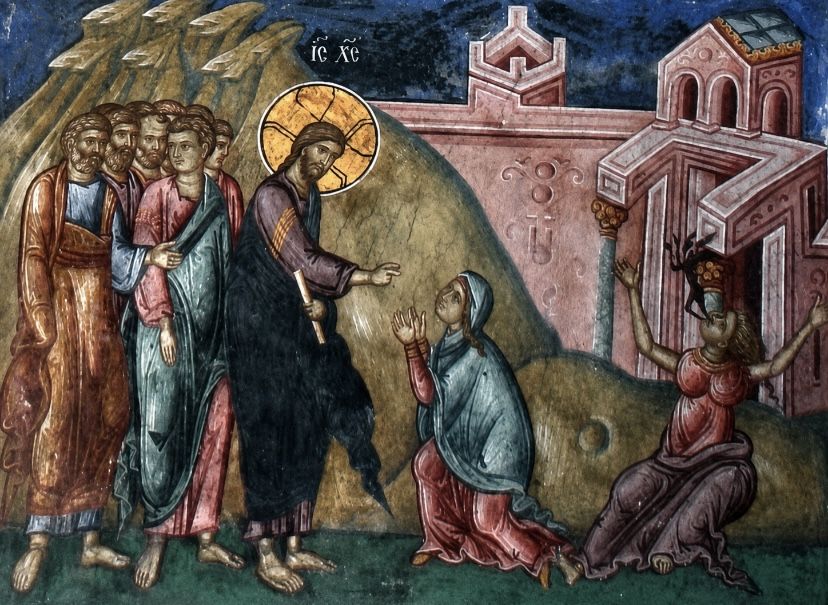
The Canaanite woman in the Gospel does not belong to the Jewish people, and the disciples appear to regard her as a nuisance. They want Jesus to send her away and maintain the boundary between themselves and this foreign woman. Yet she refuses to allow the label of “foreigner” to silence her prayer. She continues to cry out, “Lord, help me.” In response to her persistent faith, Jesus pours out his healing grace upon her daughter.
Jesus finally says to her, “Woman, you have great faith.” The person whom the disciples wanted to send away is recognised by Jesus as a woman of remarkable faith.
The Census records our country of birth and ancestry; Jesus recognises the faith within the human heart. The Census counts every person who is present; God sees every person as precious. The Church is therefore called not merely to acknowledge that people come from different backgrounds, but also to make God’s welcome visible to them.
Our parish reflects the cultural diversity with which God has blessed our world. Yet someone may still feel like a foreigner in our parish because of their accent, culture, appearance, or unfamiliarity with Catholic traditions. Our words and attitudes must never make anyone feel invisible, unwelcome, or unwanted.
At every Eucharist, a kind of spiritual census is revealed. People from many backgrounds gather around one table, united not by nationality, ancestry, or language, but by the mercy of Christ. Let us look around and recognise who is with us. We may be different from one another in many ways, yet we worship the same God and receive the same Body of Christ.
May our parish truly become what God desires: a house of prayer and a spiritual home for all peoples.
Fr Minje
Sponsors Of The Parish Newsletter: